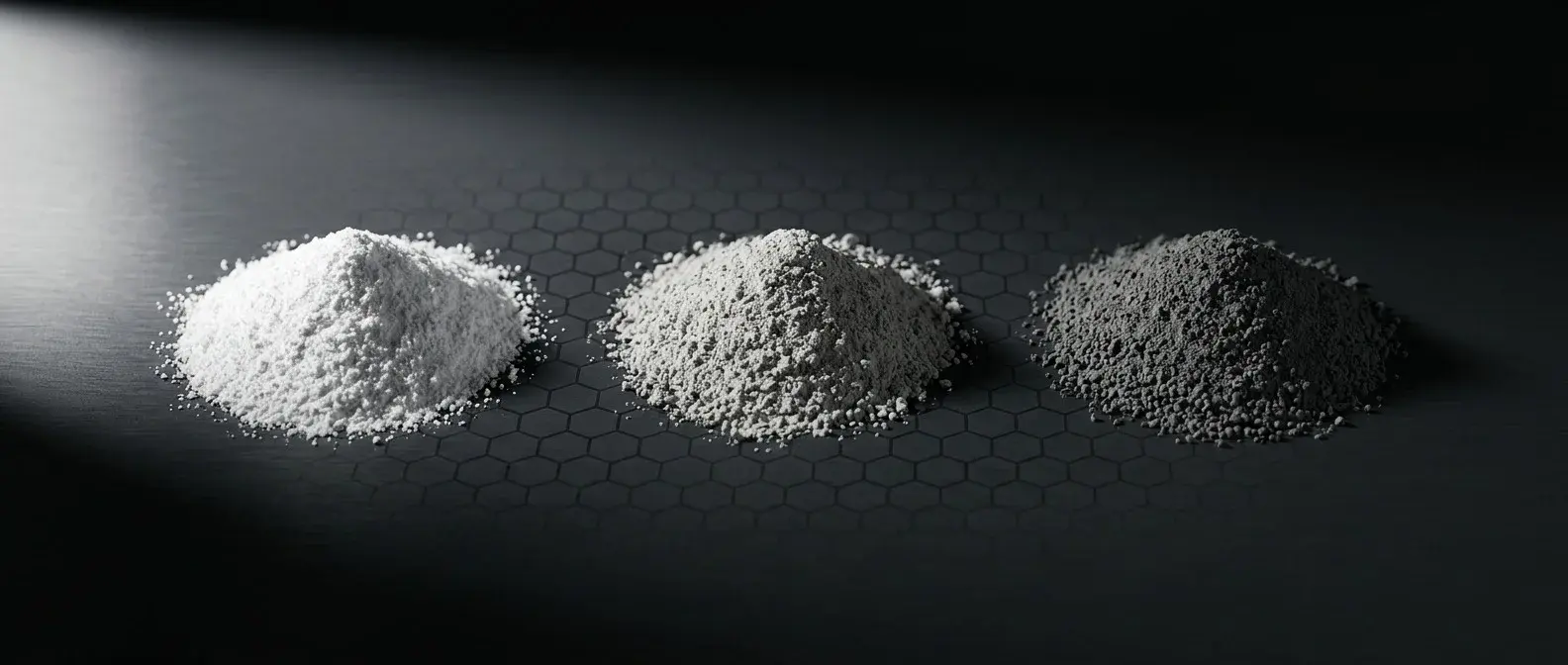
Powders for space, AI infrastructure and defence. Formulated to the thermal, mechanical and mineralogical envelope your part has to live in.
Regolith simulants matched to Apollo reference samples, and low-expansion glass-ceramic for optical and structural hardware. Materials that behave the same way on the ground and off it.
Thermal expansion decides how long a substrate lasts. Tunable-CTE glass-ceramic lets the material meet the silicon, rather than the other way round.
Ballistic-grade alpha-alumina, characterized to ASTM, with a documented mechanical envelope. Radome and high-temperature work where thermal shock decides the outcome.
The expertise behind these three platforms was built across academic and industrial programmes over four decades, not assembled from a catalogue.
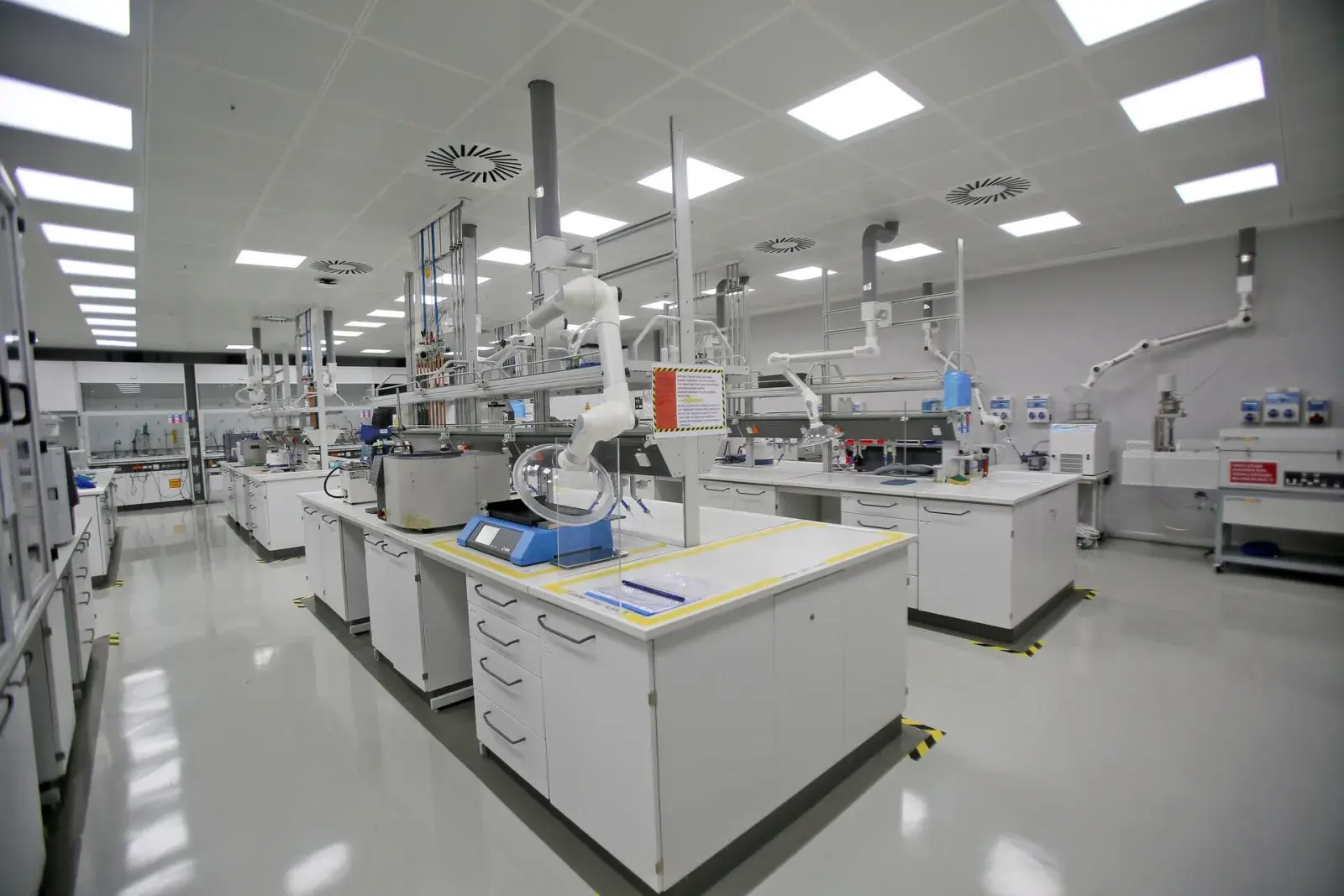
Production runs through a full materials laboratory, with the instrument access and process control that implies.
Batches are made by doctorate-level engineers. The person who formulates the powder is the person who fires it.
| Method | What it establishes | Standard |
|---|---|---|
| Laser diffraction (PSD) | Particle size distribution | ISO 13320 |
| BET | Specific surface area | ISO 9277 |
| XRD | Crystalline phase, mineralogical match | |
| SEM-EDS | Microstructure, grain morphology, elemental distribution | |
| Push-rod dilatometry | Thermal expansion behaviour | |
| Archimedes | Sintered density and porosity | ASTM C20 |
| Vickers | Hardness | ASTM C1327 |
| Vickers indentation | Fracture toughness, fracture origins | ASTM C1327, ASTM C1322 |
| Impulse excitation | Dynamic elastic modulus |
The list is not exhaustive. The laboratory carries a broader instrument set and additional characterization is available on request.
Every batch ships with a characterization report referenced to the specification it was built against. Where a property has not been characterized, the datasheet says so rather than leaving the line blank.
Evaluation starts at kilogram scale. Run a new material through your own process, see how it behaves, and decide from evidence rather than a datasheet.
If the first batch is close but not right, the formulation is adjusted, fired and characterized inside one development cycle. Small batches are what make that iteration possible.
The process path that produces your one-kilogram evaluation batch is the same one that produces the supply batch behind it.
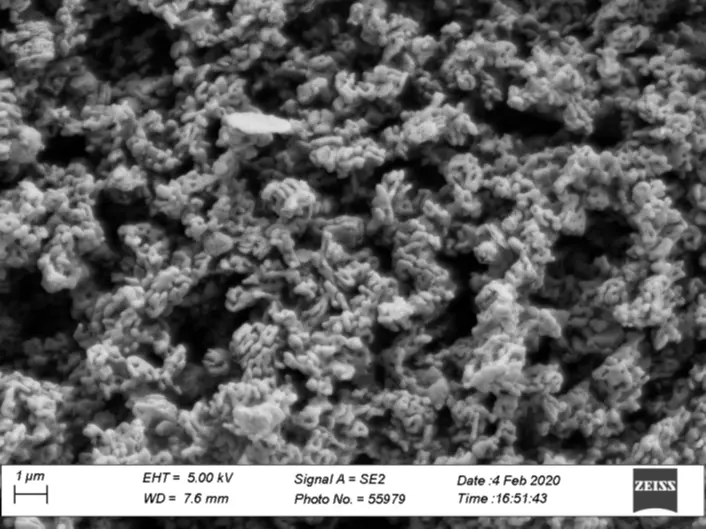
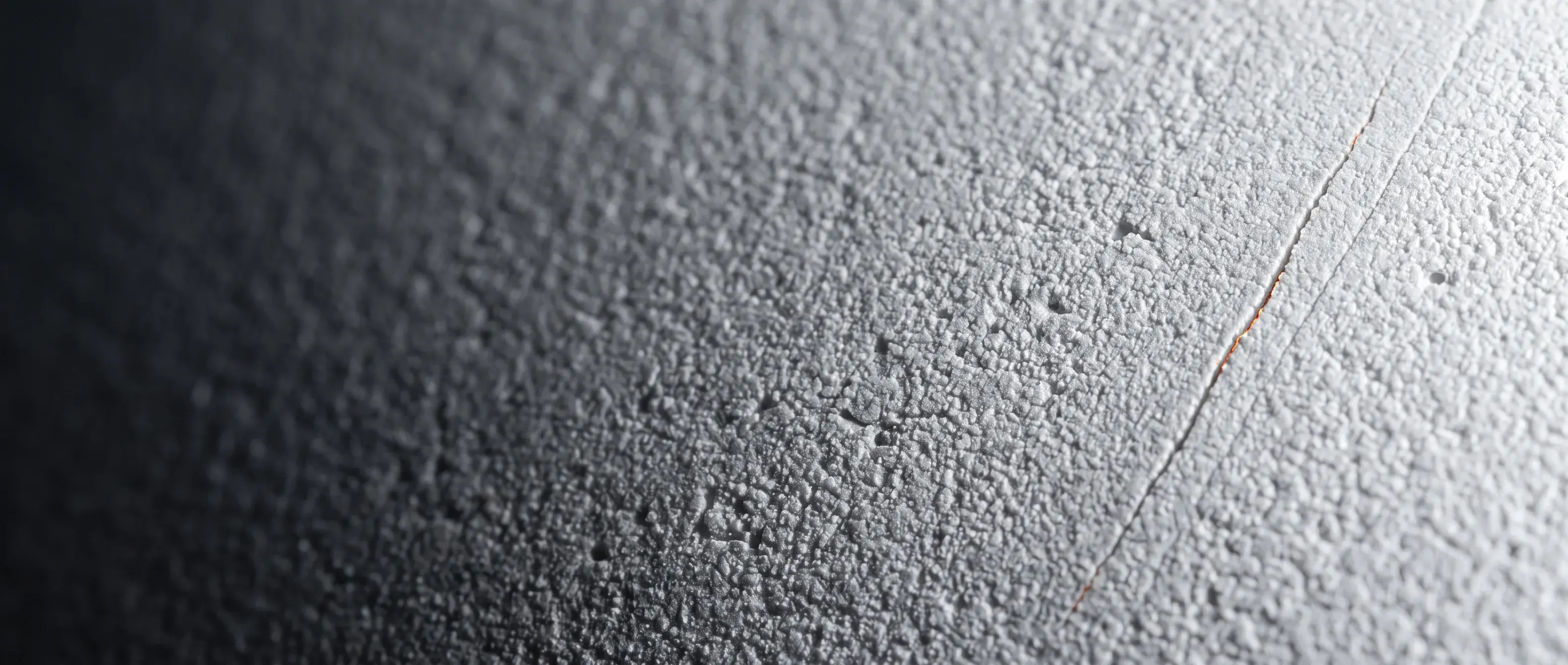
Sub-micron particle morphology, D10 490 nm. Grain structure after sintering at 1550 °C.
Confidential / / / Image withheld
Controlled crystallization. The glass and crystalline phases that carry the tunable expansion behaviour.
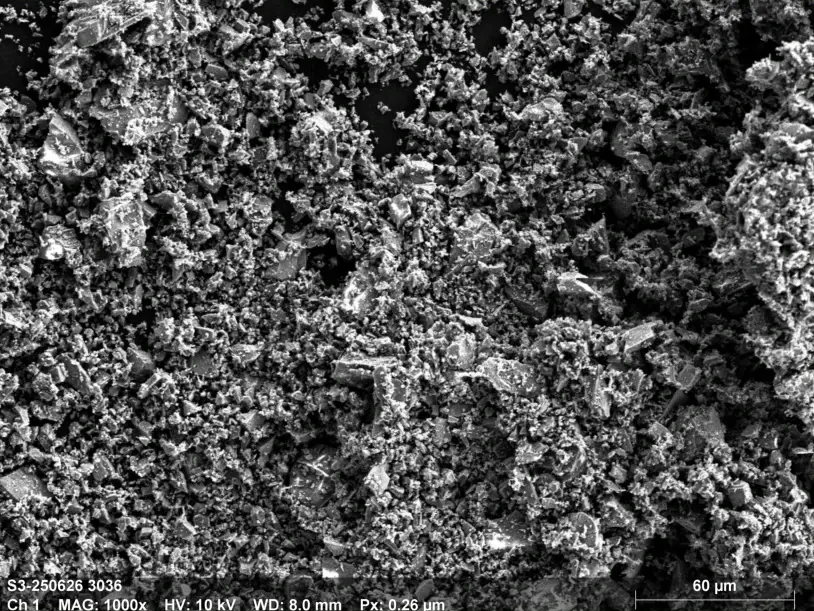
Angular particle geometry characteristic of comminuted lunar-analogue material, the property that drives abrasion and flow behaviour in hardware testing.
These are our own materials, imaged in our own laboratory.
Custom formulation / / / ITAR-free / / / Fast lead times
Built on decades of formulation expertise, a full materials characterization laboratory, and the Inovent (Sabanci TTO) spin-off partnership behind the company.