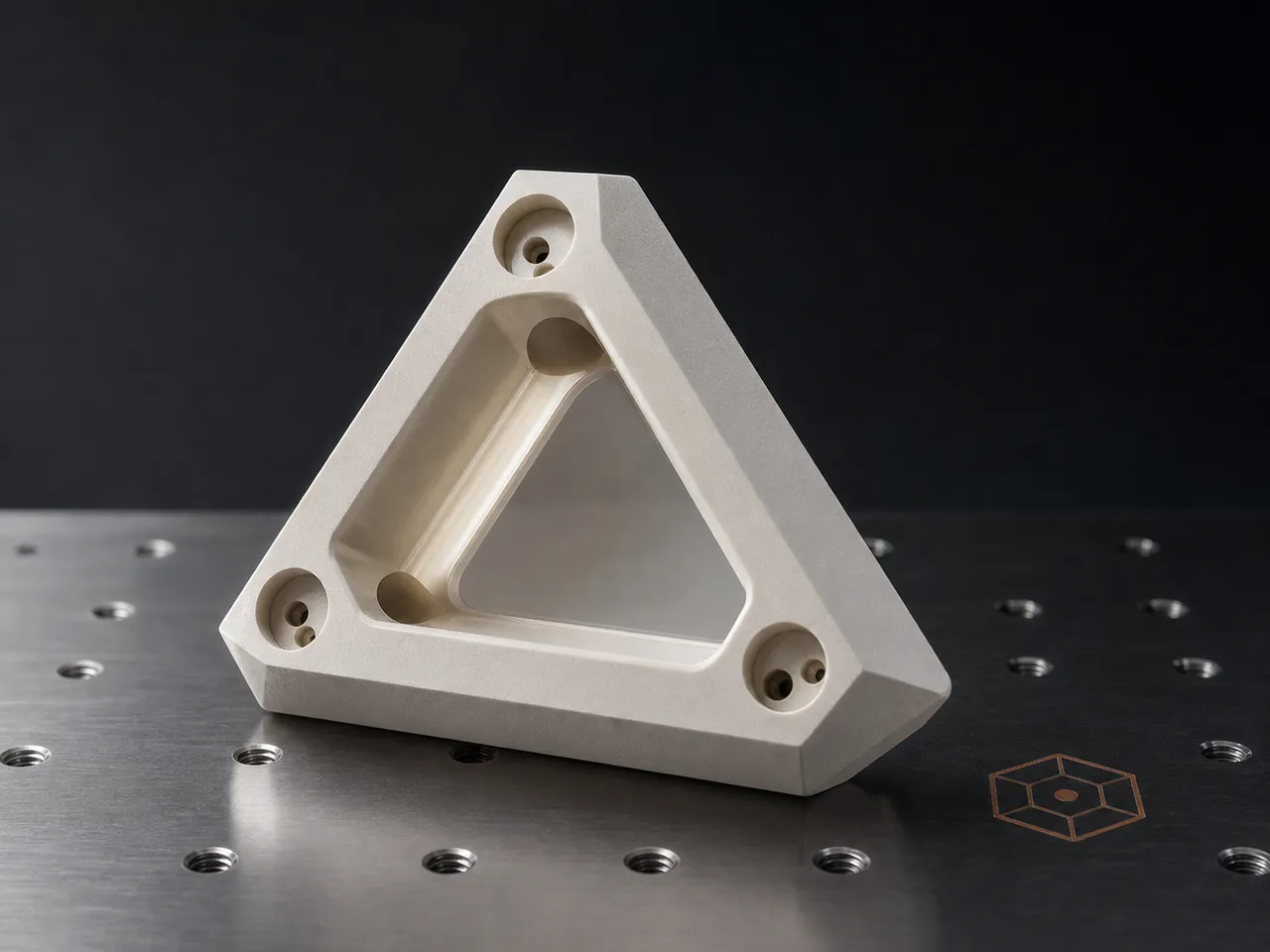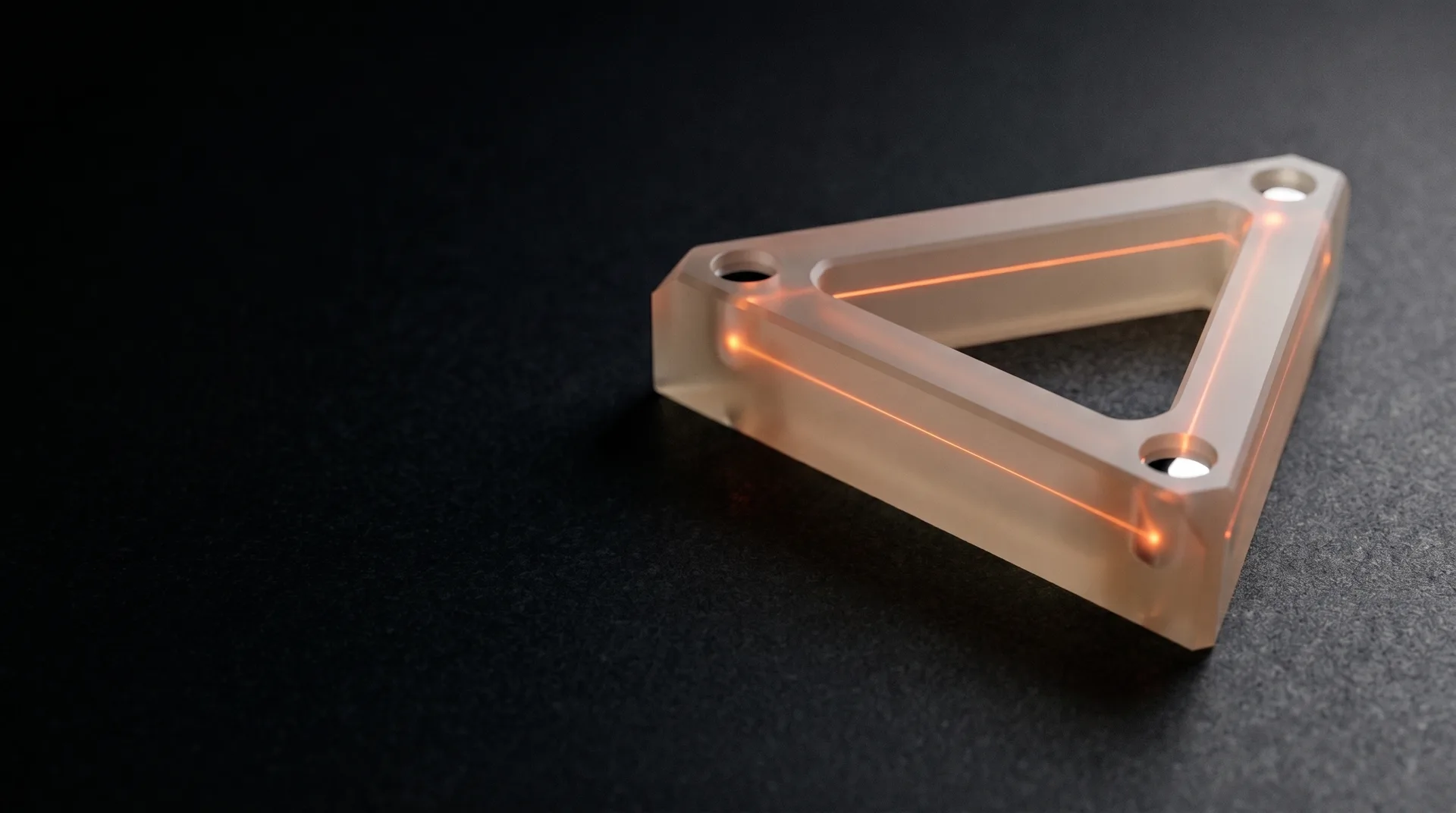
Adjustable thermal expansion for ring laser gyroscope cavities and precision metrology.
One application in validation today, on the component where dimensional stability sets the instrument's error budget.
A ring laser gyroscope measures rotation from the frequency difference between two beams travelling a closed optical path. Drift in the length of that path is drift in the reading. The cavity block is therefore a metrology component, not a housing.
Published low-expansion materials are specified against a narrow reference band, usually near room temperature, and supplied as finished blanks. An instrument that operates from cold start through to steady state does not spend its life inside that band.
What that costs is a bias that tracks temperature. It gets compensated in software rather than removed in the material, and the compensation itself has to be characterized across the full envelope during qualification. The material decision sets how much of that work is unavoidable.
CTE tuned to the operating temperature for navigation-grade dimensional stability.
Coefficient of thermal expansion formulated to the operating temperature of your instrument rather than to a published reference band, adjustable across 100 to 800 °C. Composition α-Al₂O₃ + boron-based additive. Supplied as a ready-to-fire powder blend, so cavity geometry, finishing and the qualification record stay inside your facility.
Full Adaptive Glass-Ceramic specEngineers working on navigation-grade instruments often also evaluate Strocera in Space for optical benches and equipment decks, and Strocera in Defence for radome structures.
Bring the operating conditions. We'll tell you which platform fits, and how we'd formulate it.
Talk to materials engineering